From a beetle-killed ash behind a Hannibal garage to a leaning cottonwood over a county-road fence line near Taylor — priced free by a local pro, then brought down the way the situation demands.
The removal list in Marion County writes itself in three hands. First the ash: the emerald ash borer reached northeast Missouri years ago, and a dead ash doesn't stand politely — it goes brittle from the top down until pieces of it start arriving in the yard on their own schedule. Second the silver maples, planted by the hundreds in Hannibal's older blocks, fast-growing and weak-jointed, shedding leaders into driveways every windy spring. Third the judgment calls: sound oaks and sycamores that simply stand too close to too much — roof, service drop, sewer lateral, the neighbor's garage.
That third category deserves a skeptical eye, and an honest pro brings one. A fair share of “this tree has to go” visits end with a pruning quote for Marion County work instead, at a fraction of the price. You lose nothing by hearing both numbers.
Height sets the opening bid; everything after that is geography and condition. A tree in an open Palmyra side yard with room to drop wood is the easy version. The same species grown up between a house and a detached garage on one of Hannibal's hill streets becomes a rigging job — climbed, cut small, and lowered under control, sometimes with no place to park the chipper closer than the corner. Dead wood costs more than green because it can't be trusted to hold a climber or behave under a saw. And haul-off is real money: keep the trunk for firewood and the quote usually drops.
| Work | Typical range |
|---|---|
| Small tree (roughly under 30 ft) | $300 – $700 |
| Medium tree (roughly 30–60 ft) | $700 – $1,500 |
| Large tree (roughly 60–80 ft) | $1,500 – $2,800 |
| Very large, dead, or over a structure | Quoted — often $2,800+ |
| Stump grinding (per stump) | $100 – $350 |
| Storm / emergency response | Quoted — priority scheduling |
These bands are orientation, nothing more. What a tree in this county actually costs turns on the ground under it — a flat backyard off Pleasant Street prices differently than the same trunk leaning off a bluff lot above the river — and on rot, lean, wires, and where the wood can land. The number that matters is the free one a Marion County pro gives you after standing under the tree.
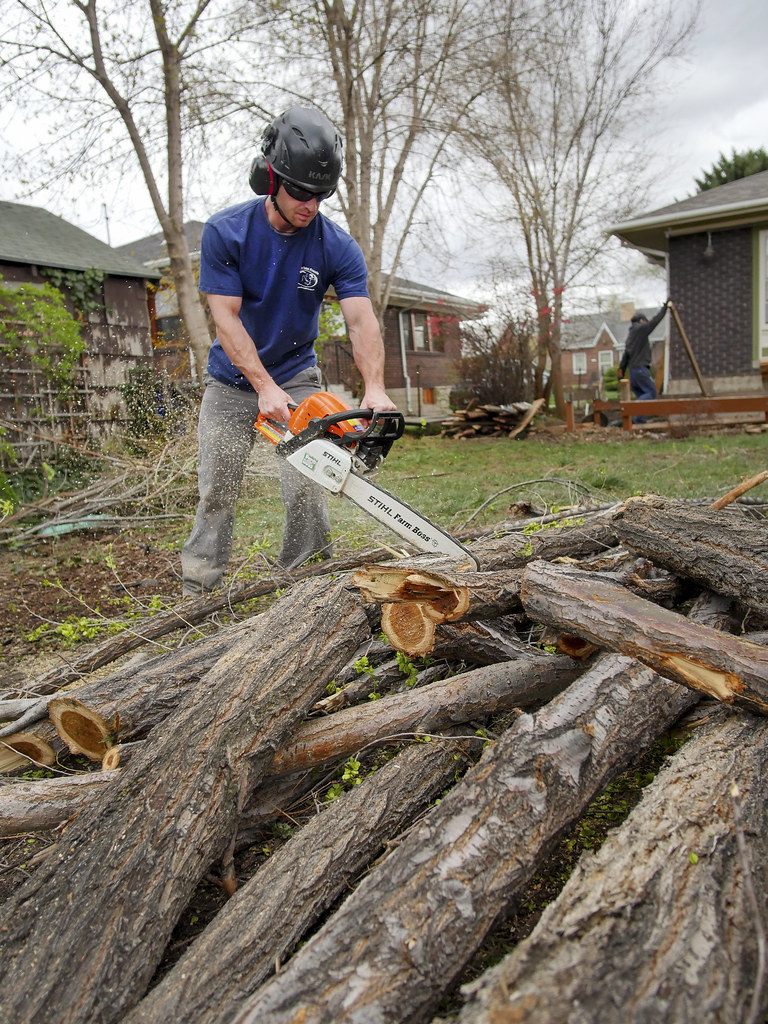
Open-ground removals are usually a same-day affair: notch, fell, buck, chip, rake. Tight-quarters work runs top-down instead — a climber or a lift, limbs roped and landed in order, the trunk coming down in rounds. Either way the crew that quoted it handles the cleanup that was agreed to, whether that's a bare lawn or rounds stacked by the shed for your splitter.
Two follow-on decisions are worth making before the truck arrives. The stump: most people add grinding while the crew is already in the county, because a second trip later costs more than the add-on now. And the paperwork: if this removal exists because of a buyer's inspection or an insurance letter, start from the deadline-work page for Marion County — that version needs documentation done right.
For a tree entirely on your own property, ordinary removals in this county don't generally involve a permit office — but street trees, anything in a public right-of-way, and rules inside city limits are their own subject, and the answer can differ between Hannibal, Palmyra, and Monroe City. Raise it during the free quote; the pro pricing your job works under those rules every week and will give you the current answer for your exact address.
A straightforward tree is typically down and cleaned up inside a day, often a morning. Rigging over a structure stretches that, and the biggest jobs run two days. The quote will say which kind yours is.
Whatever you want, priced accordingly. Full chip-and-haul leaves nothing behind; asking for the trunk bucked to stove length and left stacked usually takes real dollars off the bill.
Ready for the actual number? A free quote from a Marion County pro settles the guessing.
Call (573) 447-8588 Use the Form