First, the wires
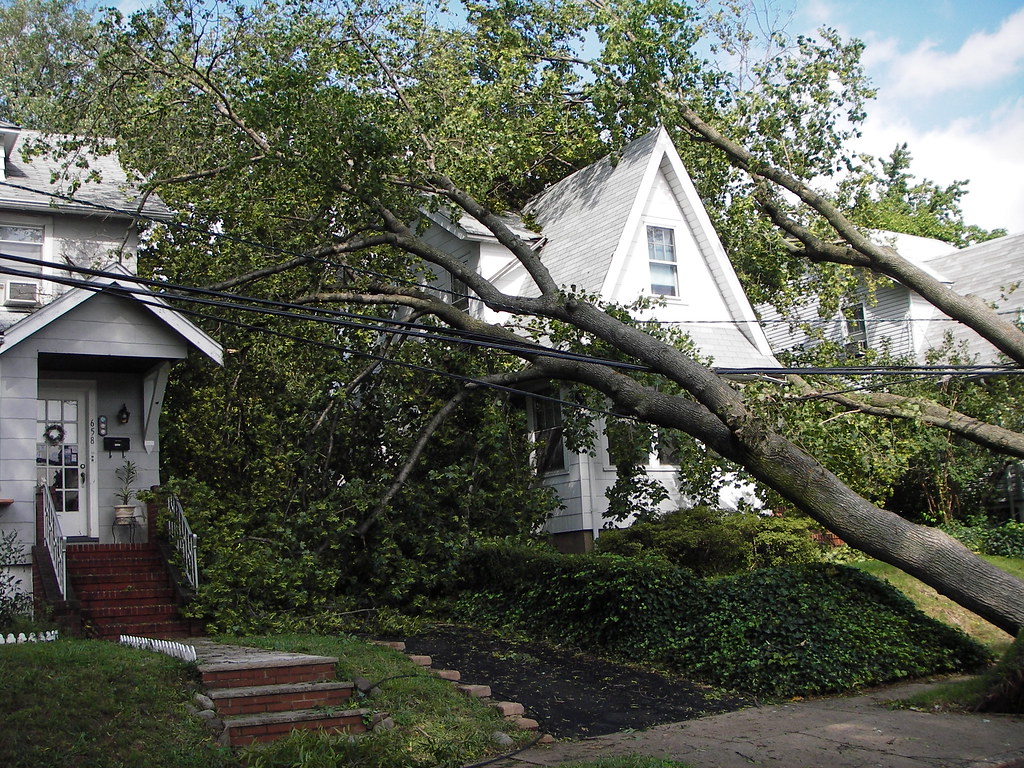
Before anything else: if the tree took a line down with it, or is resting anywhere near one, everything stops. Inside Hannibal that means a call to the Board of Public Works, which runs the city's electric system; in Palmyra, the city's own utility; on a rural stretch, Ralls County Electric Cooperative or whoever sends your bill; when in doubt, 911. A service drop tangled in wet branches can be as dangerous as the transmission line it feeds from, and no tree crew touches energized wood. The utility clears its hazard, then the tree work starts.
Then, the tree
Storm wood is the most dangerous wood there is, because none of it is where it chose to be. A trunk across a roof is loaded like a spring; a half-fallen leader hung in a neighboring crown is a question of when, not if. This county's storms supply every version — squall lines that run up the river valley in spring, the occasional summer derecho, and ice in January that adds hundreds of pounds to wood already tired. Emergency crews work the same triage every time: stabilize or remove what threatens people first, open the driveway second, and leave the tidy-up for daylight rates.
Write it down as you go
If a structure is involved, your insurer enters the story, and the story needs pictures. Photograph everything before the saws start — the tree, the damage, the wide shot that shows how they relate. Keep the invoice for the emergency work separate from any later cleanup. Whether a given policy pays for removal depends on the policy and on what the tree hit, so promise yourself nothing; document like it will pay and let the adjuster do the ruling. The pro who handles the emergency can usually hand you exactly the paperwork that conversation wants — and if the storm has pushed a sale or an insurer demand into the picture, the Marion County deadline-work page covers that version.